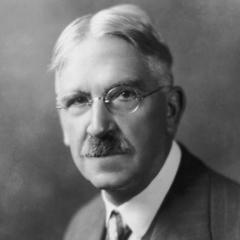
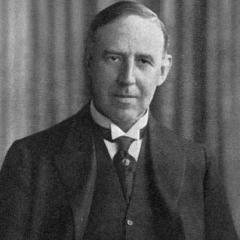
Alfred North Whitehead Quotes:
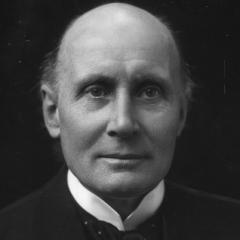
Ocupation: Mathematician
Life: February 15, 1861 - December 30, 1947
Birthday: February 15
Death: December 30
famous quotes
The art of progress is to preserve order amid change and to preserve change amid order.
source: - Alfred North Whitehead, David Ray Griffin (1978). “Process and reality: an essay in cosmology”, Free Pr
Topics: Change, Art, Order, Managing Change, Enemy Of Progress
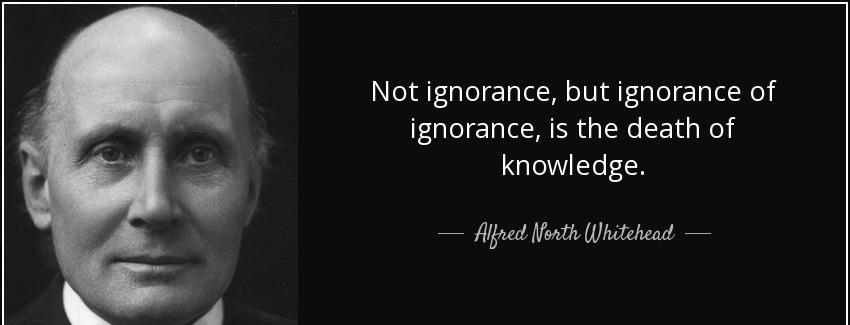
Not ignorance, but ignorance of ignorance, is the death of knowledge.
Topics: Ignorance, Stupidity, Political, Knowledge And Ignorance, Ignorance Is Bliss
source: - Alfred North Whitehead, Lucien Price (2001). “Dialogues of Alfred North Whitehead”, p.183, David R. Godine Publisher
Topics: Dog, Cat, Animal, Inspirational Animal, Inspirational Cat
source: - Alfred North Whitehead (2014). “Science and Philosophy”, p.54, Open Road Media
Topics: Independent, Literature, Way, Philosophic
From the very beginning of his education, the child should experience the joy of discovery.
Topics: Music, Education, Children, Math Education
Knowledge shrinks as wisdom grows.
source: - Alfred North Whitehead (1967). “Aims of Education”, p.37, Simon and Schuster
There are no whole truths: All truths are half-truths.
source: - Dialogues prologue (1954)
Topics: Truth, Half, Half Truth, Whole Truth, Honest Truth
source: - Alfred North Whitehead (1968). “Modes of Thought”, p.168, Simon and Schuster
Topics: Philosophy, Done, Wonder, Childlike Wonder
Ideas won't keep. Something must be done about them.
Topics: Ideas, Innovation, Done, Innovation And Business, Inspirational And Innovation
The pursuit of mathematics is a divine madness of the human spirit.
Topics: Math, Spirit, Madness, Math And Love, Mathematical Logic
Everything of importance has been said before by somebody who did not discover it.
Topics: Wisdom, Math, Science, Discovery In Science
Topics: Plato, Philosophical, Knowledge, Characterization, Footnotes
The silly question is the first intimation of some totally new development.
Topics: Silly, Innovation, Development
It requires a very unusual mind to undertake the analysis of the obvious.
Topics: Learning, Science, Being Different, Familiar Things
Education should turn out the pupil with something he knows well and something he can do well.
Topics: Inspirational, Pupils, Should
We think in generalities, but we live in detail.
source: - Alfred North Whitehead (2014). “Science and Philosophy”, p.20, Open Road Media
Topics: Inspirational, Time, Educational, Generalities, Brainstorming
Apart from blunt truth, our lives sink decadently amid the perfume of hints and suggestions.
Topics: Life, Suggestions, Hints
The deepest definition of youth is life as yet untouched by tragedy.
Topics: Time, Tragedy, Definitions
Topics: Simplicity, Philosopher, Motto, Guiding Stars, Simple And Complex
Apart from God every activity is merely a passing whiff of insignificance.
Topics: God, Passing, Passings, Insignificance
Topics: Progress, Evolution, Language, Apprehension
True courage is not the brutal force of vulgar heroes, but the firm resolve of virtue and reason.
Topics: Courage, Hero, Bravery, True Courage, Bravery And Fear
Topics: Imagination, Experience, Tragedy
Art flourishes where there is a sense of adventure.
Topics: Art, Adventure, Scrapbooking, Inspirational Adventure Time
Topics: Art, Patterns, Recognition, Aesthetics
Almost all new ideas have a certain aspect of foolishness when they are first produced.
Topics: Science, Ideas, Firsts, New Ideas, Original Ideas
Topics: Majority, Morality, Given, Immorality
Topics: Fall, Science, Simple, Simple And Complex
Topics: Ideas, Mind, Combination
source: - Alfred North Whitehead (1967). “Aims of Education”, p.14, Simon and Schuster
Topics: Perception, Foundation, Eternity
Without adventure civilization is in full decay.
Topics: Adventure, Civilization, Decay, Adventure And Risk
Topics: Math, Development, May, Math And Science
Religion is the reaction of human nature to its search for God.
Topics: Religion, Human Nature, Reactions
Topics: Running, Heaven, Essentials, Social Systems, Clockwork
A great society is a society in which its men of business think greatly of their functions.
Topics: Men, Thinking, Society, Great Society
Topics: Adventure, Mean, Men, Disclosure, Recourse
Topics: Strong, Jobs, Men, Job Well Done, Harbour
Topics: Song, Nature, Congratulations, Odes
Topics: Fake, Branches, Mathematics, Exactitude, Exactness
It is more important that a proposition be interesting than that it be true.
Topics: Truth, Interesting, Important, Propositions, Tautology
Topics: Mother, Silly, Exercise, Intellectual Curiosity, Vigorous
Topics: Math, Organization, Imagination
Topics: Art, Writing, Self, Refreshments
Topics: Children, Taken, Independent, Abstraction
Topics: Greek, Firsts, Mathematics, Specifications
It takes an extraordinary intelligence to contemplate the obvious.
Topics: Obvious, Contemplating, Extraordinary
Topics: Peace, Self, Personality, Width
Topics: Interesting, Important, Energy
Topics: Learning, Race, Brain, Mathematical Problems
Topics: Life, Symbolism, Texture, Degeneration
Topics: Life, Degenerates, Decent, Comfortable Life
Topics: Past, Use, Holy, Knowledge Of The Past, Holy Ground
Not a sentence or a word is independent of the circumstances under which it is uttered.
Topics: Independent, Conversation, Circumstances
Education with inert ideas is not only useless; it is above all things harmful.
Topics: Education, Ideas, Useless, Unschooling
Topics: Government, Facts, Considering
Topics: Civilization, Age, Degrees, Inconsistent, Instability
The future belongs to those who can rise above the confines of the earth.
source: - Twitter post from Jan 31, 2017 
Topics: Earth, Rise Above
Topics: Math, Errors, Facts, Calculations
No Roman ever died in contemplation over a geometrical diagram.
Topics: Contemplation, Diagrams, Mathematical
Topics: Inspirational, Humble, Ideas
Topics: Discovery, Weapons, Facts, Abstraction
Topics: Differences, Experience
Topics: Adventure, Civilization, Decay
Fertilization of the soul is the reason for the necessity of art.
Topics: Art, Soul, Reason, Fertilization
Topics: Philosophy, Science, Justify
Vedanta is the most impressive metaphysics the human mind has conceived.
Topics: Mind, Impressive, Metaphysics, Vedanta
Topics: Important, Principles, Details, Utilization
Thus the negative perception is the triumph of consciousness.
source: - Russell L. Kleinbach, Karl Marx, Alfred North Whitehead (1982). “Marx via process: Whitehead's potential contribution to Marxian social theory”
Topics: Perception, Triumph, Negative, Postmodernism, Constructivism
source: - Carter G. Woodson (2006). “The Mis-Education of the Negro”, p.9, Book Tree
Topics: Information, Printing, Century
The consequences of a plethora of half-digested theoretical knowledge are deplorable.
Topics: Half, Theoretical, Consequence
Topics: Determination, Opinion, Preservation
Topics: Views, Two, Justice, Deductions
Topics: Music, Numbers, Use, Poetry And Music, Numbers And Math
Topics: Creativity, Reality, Growth, Unlimited Possibilities
Topics: Development, Derivatives, Medieval
Each human being is a more complex structure than any social system to which he belongs.
source: - Alfred North Whitehead, Lucien Price (2001). “Dialogues of Alfred North Whitehead”, p.113, David R. Godine Publisher
Topics: Individual, Social, Structure, Social Systems
Algebra reverses the relative importance of the factors in ordinary language.
Topics: Math, Ordinary, Language, Written Language
The total absence of humor from the Bible is one of the most singular things in all literature.
Topics: Literature, Absence
...the only simplicity to be trusted is the simplicity to be found on the far side of complexity.
Topics: Simplicity, Sides, Found, Far Side
source: - Alfred North Whitehead, Lucien Price (2001). “Dialogues of Alfred North Whitehead”, p.98, David R. Godine Publisher
Topics: Matter, Juxtaposition, Deals
Topics: Appreciation, College, Issues, Rational Thought
Topics: Thinking, Knowing, Too Much, Knowing Too Much
The defense of morals is the battle-cry which best rallies stupidity against change.
Topics: Stupidity, Battle, Defense, Battle Cry
Topics: Creativity, Men, Creating
Topics: Appreciation, Intellectual, Criticism, Emergence
Topics: Education, Adequate, Antithesis, Liberal Education, Technical Education
Topics: Friendship, Want, Shields
Vigorous societies harbour a certain extravagance of objectives.
Topics: Extravagance, Harbour, Certain
source: - Alfred North Whitehead (1967). “Aims of Education”, p.30, Simon and Schuster
An enormous part of our mature experience cannot not be expressed in words.
Topics: Experience, Mature Love, Mature
Speak out in acts; the time for words has passed, and only deeds will suffice.
Topics: Speaks Out, Deeds, Action
source: - Dialogues (1954) 15 Dec. 1939
Topics: Wise, Intelligent, Intelligence, Quickness
The purpose of education is not to fill a vessel but to kindle a flame.
Topics: Flames, Purpose, Kindles, Purpose Of Education
source: - Alfred North Whitehead (2010). “Process and Reality”, p.12, Simon and Schuster
Topics: Preoccupation, Type, Rescue
The only use of knowledge of the past is to equip us for the present.
source: - Alfred North Whitehead (1967). “Aims of Education”, p.3, Simon and Schuster
Topics: Past, Use It Or Lose It, Use Of Knowledge, Knowledge Of The Past
source: - Alfred North Whitehead (1967). “Adventures of Ideas”, p.83, Simon and Schuster
The 'silly question' is the first intimation of some totally novel development.
source: - "Dialogues of Alfred North Whitehead".
Topics: Silly, Creativity, Ideas, Creative Thinking, Creative Thought
source: - 1925 Science and the Modern World.
Topics: Adventure, Safety, Unattainable
Philosophy asks the simple question: What is it all about?
source: - Alfred North Whitehead (2014). “Science and Philosophy”, p.81, Open Road Media
Topics: Philosophy, Simple, Asks
Fundamental progress has to do with the reinterpretation of basic ideas.
source: - Alfred North Whitehead (2014). “Science and Philosophy”, p.142, Open Road Media
Topics: Motivation, Ideas, Progress, Reinterpretation
source: - Alfred North Whitehead (1997). “Science and the Modern World”, p.187, Simon and Schuster
Topics: Real, Knowledge, Science, Real Knowledge
source: - Alfred North Whitehead, Lucien Price (2001). “Dialogues of Alfred North Whitehead”, p.363, David R. Godine Publisher
Topics: Mistake, Talking, Law, Natural Law
In all education the main cause of failure is staleness.
source: - Alfred North Whitehead (1967). “Aims of Education”, p.55, Simon and Schuster
Topics: Beauty, Everyday, Foundation, Cognitive
source: - Alfred North Whitehead (1997). “Science and the Modern World”, p.91, Simon and Schuster
source: - Church and Home (published by United Methodist Church, and Evangelical United Brethren Church), Volume 1, p. 21, 1964.
Topics: Religious, Affection, Persons, Religious Person
Topics: Adventure, Self, Common Sense, Dogmatism, Dogmatic
source: - Alfred North Whitehead (1967). “Aims of Education”, p.12, Simon and Schuster
Topics: Style, Mind, Lasts, Educated Mind
In order to acquire learning, we must first shake ourselves free of it.
source: - Alfred North Whitehead (1968). “Modes of Thought”, p.6, Simon and Schuster
What we perceive as the present is the vivid fringe of memory tinged with anticipation.
Topics: Memories, Vivid, Anticipation
source: - Alfred North Whitehead (1967). “Adventures of Ideas”, p.18, Simon and Schuster
Topics: Morning, Ocean, Adventure, Pacific Ocean
Intolerance is the besetting sin of moral fervour.
source: - Alfred North Whitehead (1967). “Adventures of Ideas”, p.50, Simon and Schuster
Topics: Moral, Sin, Intolerance
source: - Alfred North Whitehead (1967). “Adventures of Ideas”, p.159, Simon and Schuster
Topics: Understanding, Nuisance, Decay, Philosophic
The ultimate metaphysical ground is the creative advance into novelty.
source: - Alfred North Whitehead (1969). “Process and Reality: An Essay in Cosmology; Gifford Lectures Delivered in the University of Edinburgh During the Session 1927-28”, New York : Macmillan
Topics: Creative, Novelty, Metaphysical
Topics: Beauty, Discovery, Matter, Recapitulation
source: - Alfred North Whitehead, Lucien Price (2001). “Dialogues of Alfred North Whitehead”, p.160, David R. Godine Publisher
Topics: Life, Math, Mind, Infinite Possibilities, Finitude
source: - An Introduction to Mathematics ch. 5 (1911)
Topics: Book, Math, Thinking, Cavalry, Decisive Moments
Topics: India, Today, Ancient, Vedanta, Ancient India
source: - Alfred North Whitehead (1997). “Science and the Modern World”, p.48, Simon and Schuster
Topics: Philosophy, Numbers, People
The chief danger to philosophy is narrowness in the selection of evidence.
source: - Alfred North Whitehead (2010). “Process and Reality”, p.337, Simon and Schuster
Topics: Philosophy, Danger, Chiefs
source: - Alfred North Whitehead (2010). “Process and Reality”, p.228, Simon and Schuster
Topics: Self, Oneness, Diversity, Self Identity
source: - Alfred North Whitehead (1967). “Adventures of Ideas”, p.99, Simon and Schuster
Topics: Character, Personality, Encounters
Topics: Science, Aim, Particular
The merely well-informed man is the most useless bore on God's earth.
source: - Alfred North Whitehead (1967). “Aims of Education”, p.1, Simon and Schuster
source: - 1911 Introduction to Mathematics.
Topics: Philosophical, Writing, Talking, Profundity, Talking Nonsense
source: - "Adventures of Ideas".
Aristotle discovered all the half-truths which were necessary to the creation of science.
source: - Alfred North Whitehead (1954). “Dialogues of Alfred North Whitehead”
source: - Alfred North Whitehead (1997). “Science and the Modern World”, p.4, Simon and Schuster
Speech is human nature itself, with none of the artificiality of written language.
source: - Alfred North Whitehead (1968). “Modes of Thought”, p.37, Simon and Schuster
Topics: Speech, Language, Human Nature, Written Language, Artificiality
source: - Alfred North Whitehead (1967). “Adventures of Ideas”, p.72, Simon and Schuster
Topics: Math, Ideas, Issues, Straws, Deductions
source: - Alfred North Whitehead (1925). “An Enquiry Concerning the Principles of Natural Knowledge”
Topics: Expression, Feelings, Desire
The motive of success is not enough.
source: - Alfred North Whitehead (1967). “Adventures of Ideas”, p.98, Simon and Schuster
Topics: Future, Civilization, Progress
source: - Alfred North Whitehead (1967). “Aims of Education”, p.52, Simon and Schuster
Topics: Morning, Sleep, Thinking, Deep Sleep, Fine Weather
source: - Alfred North Whitehead, Lucien Price (2001). “Dialogues of Alfred North Whitehead”, p.272, David R. Godine Publisher
Topics: Doe, Penalties, Periods, Idealistic
War can protect; it cannot create.
source: - Alfred North Whitehead (2014). “Science and Philosophy”, p.50, Open Road Media
No science can be more secure than the unconscious metaphysics which tacitly it presupposes.
source: - Alfred North Whitehead (1933). “Adventure of Ideas”
Topics: Metaphysics, Unconscious, Secure
source: - Alfred North Whitehead (1967). “Aims of Education”, p.36, Simon and Schuster
Topics: Teacher, Fashion, Teaching, Memorizing, Half Hearted
source: - Alfred North Whitehead (1958). “An Introduction to Mathematics”, p.4, New York : Oxford University Press, 1958 [c1948]
Topics: Ontology, Logic, Certainty, Transitory
There is no greater hindrance to the progress of thought than an attitude of irritated party-spirit.
source: - Alfred North Whitehead (1967). “Adventures of Ideas”, p.119, Simon and Schuster
Topics: Attitude, Party, Progress, Partisanship